Applied ML · Computer Vision · Research · 2025
Model-Size Reduction in Geometric Deep Optical Sensing
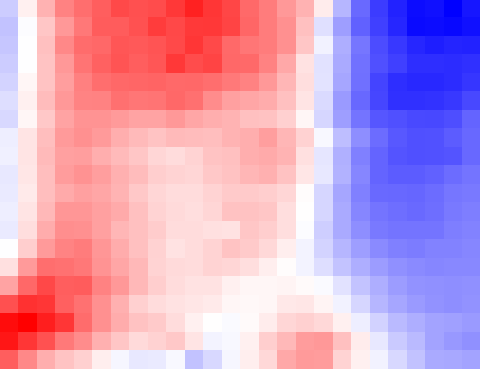
Determine how few pixels a geometric optical sensor actually needs. Starting from 20×26 photovoltage maps of a twisted double-bilayer graphene photodetector, quantify the accuracy–data trade-off to enable fast, low-power, real-time mid-IR sensing — where today's detectors are bulky, power-hungry, and often need cryogenic cooling (~77 K), driving up SWaP-C.
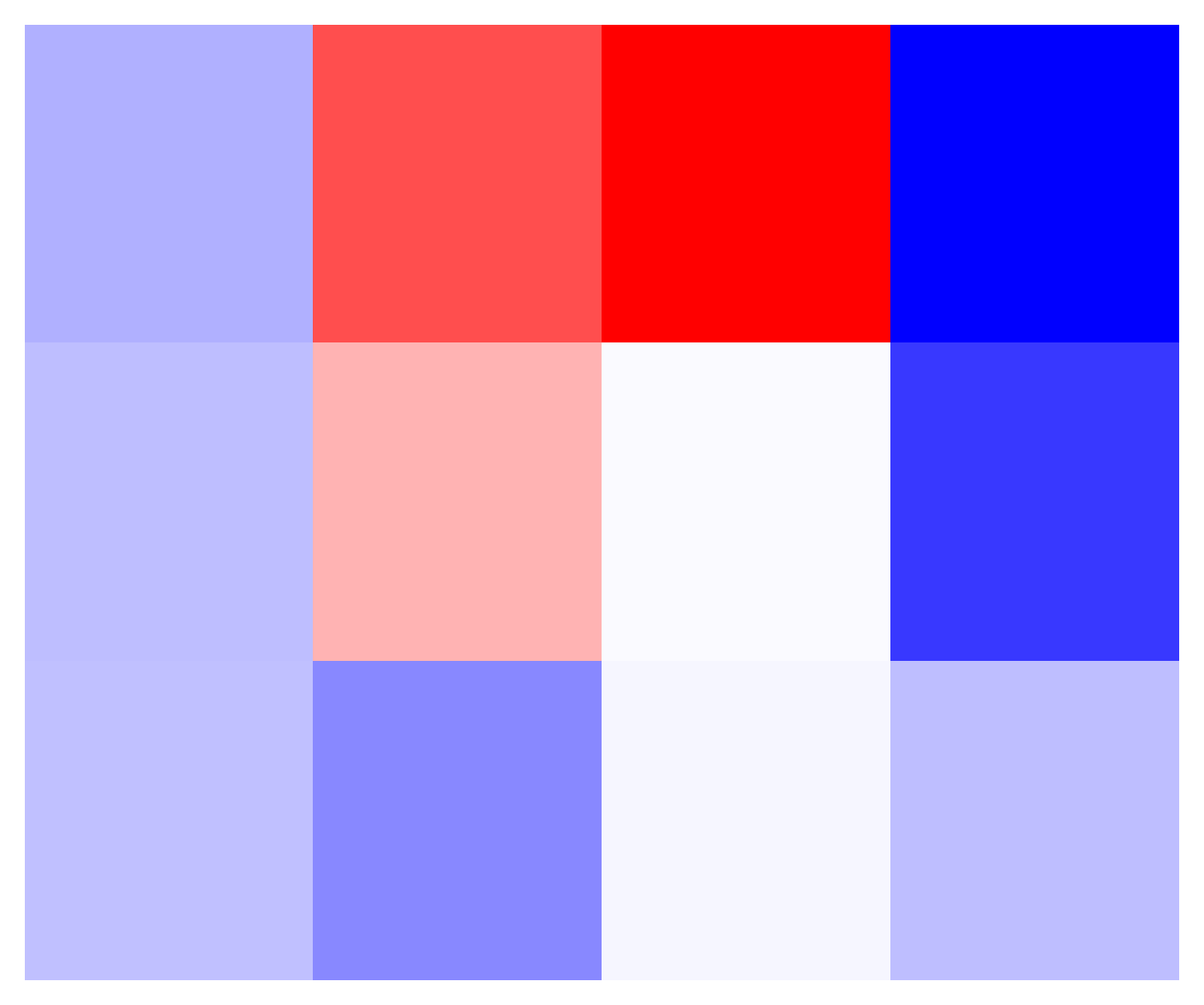
Representative sensor maps, distilled from the full resolution to a four-pixel model input.

- Built a compact CNN baseline — MSE ≈ 0.0008 at ~6000 epochs — with reproducible training, logging, and seeds.
- Designed stride- and saliency-based data-reduction modules and ran 11-resolution ablation studies to map accuracy against input size.
- Tested a conditional-GAN 'fill-in' shortcut that reconstructs full maps from small cut-outs, and ruled it out for this sensor after it produced large errors.
TensorFlow / PyTorch with NumPy and Matplotlib; stride sampling, saliency maps, and controlled ablation studies with reproducible seeds and logging.
TensorFlowPyTorchNumPyMatplotlibStride SamplingSaliency MapsAblation Studies
- Stride sampling held accuracy down to a 3×3 input (MSE ≈ 0.0009) and even 2×2 (≈ 0.0012), inside the ≤ 0.0014 target; performance only broke at a 1×2 map.
- Saliency crops worked but trained unstably, and dropping neighborhood context hurt accuracy — stride sampling won.
- Net result: a ~130× reduction in data at near-baseline accuracy, and a tiny 3×3 input often matched the full model — a clear path to fast, low-power, real-time sensing.