Propulsion · Mechanical Design · Manufacturing · 2025
~2 kN Ethanol / N₂O Pintle Rocket Engine
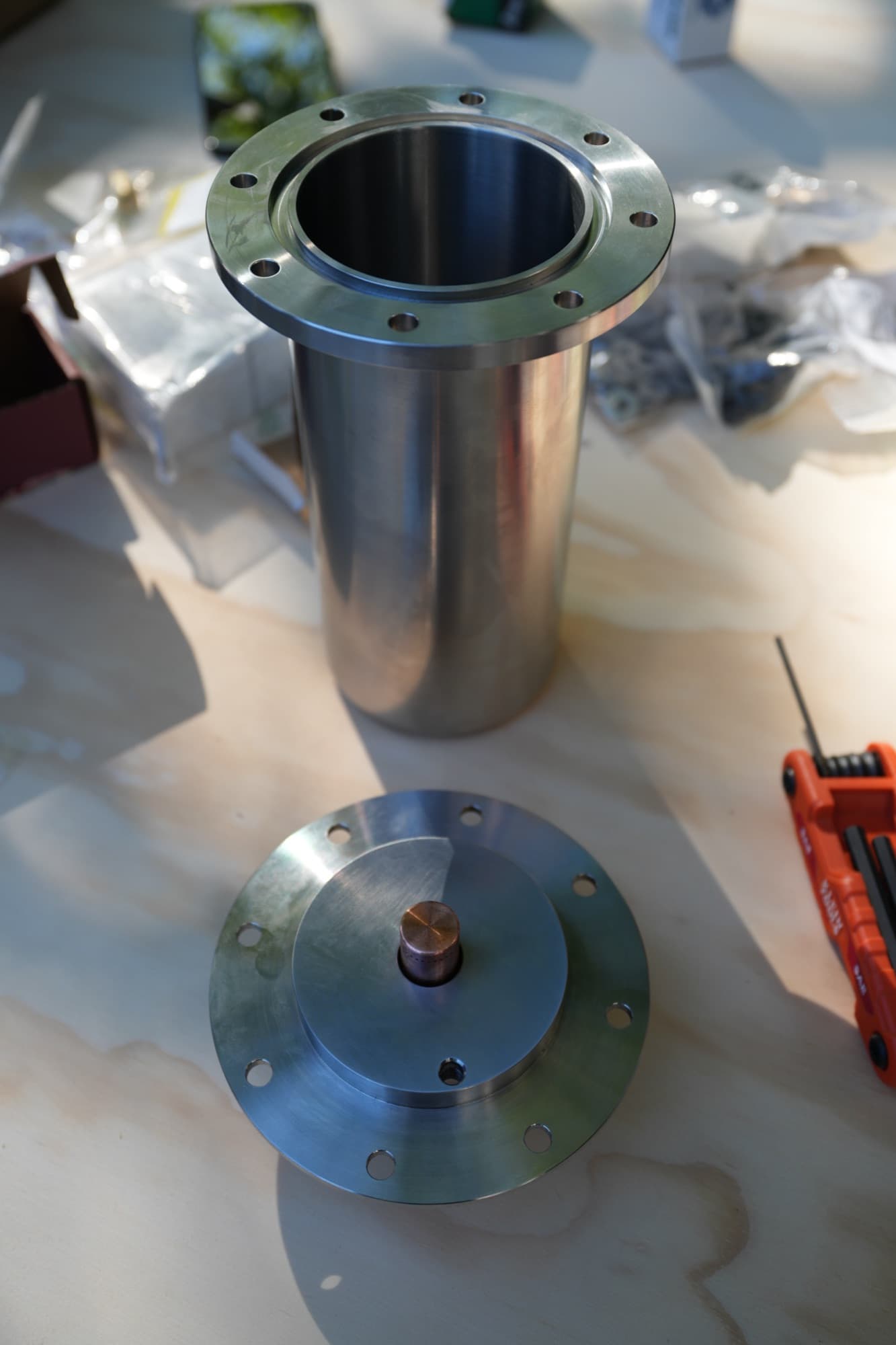
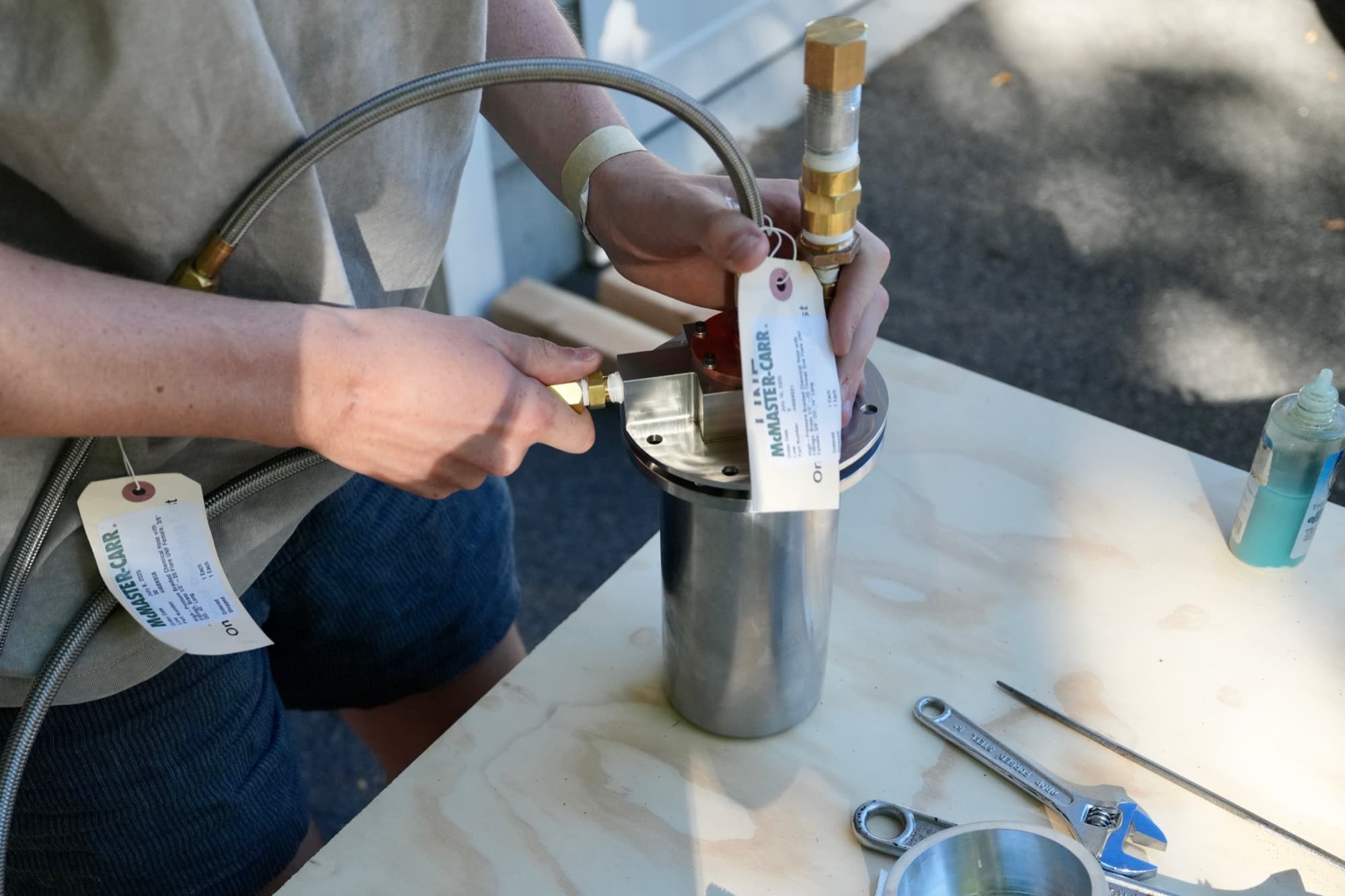
Design, build, and static-fire a ~2 kN ethanol / nitrous-oxide pintle-injector liquid rocket engine owning it end-to-end from injector geometry through structural and thermal analysis, manufacturing drawings, a remote test-control system, and the hot-fire itself.
- Designed a new pintle injector to properly atomize the oxidizer and fuel, adapting HalfCat Rocketry's impinging design into a pintle architecture and verifying it in NASA's RPA software against the HalfCat sim. Held a design review with an industry propulsion engineer to validate the key volumetric ratios and the propellant-centering scheme in the chamber.
- Authored high-precision manufacturing drawing packages and iterated the design for manufacturability with several machine shops
- Ran FEA and thermal modeling for safety and reliability, then led a formal design review with Yale's liquid rocketry club that cleared the engine for hot-fire.
- Built an Arduino-based remote control system for the fluids and igniter, which were all critically timed parameters on the microcontroller and operated over a WiFi hotspot at a safe standoff distance, with every default state designed to fail safe.
Injector and performance modeling in CEA, RPA, and HalfCat sim; SolidWorks CAD with FEA and thermal analysis; GD&T drawing packages for high-precision machining. Materials: stainless steel and copper alloys, in a static-fire-oriented architecture.
CEARPAHalfCat SimSolidWorksFEA / ThermalGD&TArduino
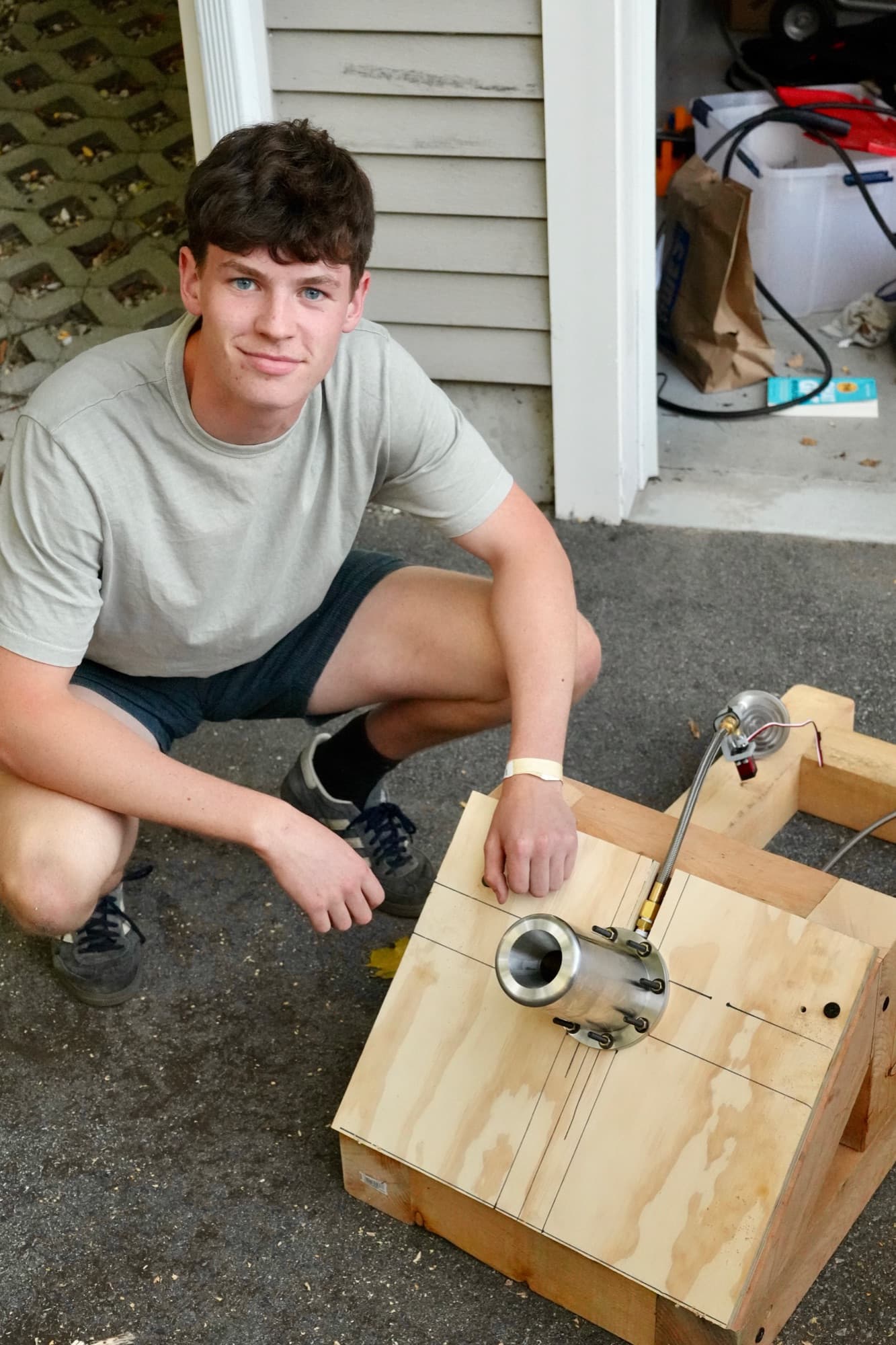
- Designed, built, and hot-fired the engine (Static Fire 1). It ignited and produced combustion confirming the fundamental design is sound, but did not yet reach a sustained burn.
- Validated structural integrity and the safety systems, and proved out the full assembly, fueling, and remote-operation procedures.
- The design review identified no major risks for a short static firing; for sustained higher-temperature flight use, the club recommended alternative metallurgies.
- Static Fire 2 is in progress, incorporating the changes below.
- What went wrong: the engine was mounted at a 45° angle, which caused ethanol to pool in the chamber and prevented a sustained burn. The angled orientation worked against propellant drainage and atomization. Therefore, the safety-first choice was sound, but it cost combustion.
- The fix: reorient the engine vertically (downward-pointing) so gravity promotes drainage and improves atomization, eliminating pooling entirely.
- Revised ignition timing for Static Fire 2: open the NOx valve first, then ethanol ~0.5 s later, so fuel enters an oxidizer-rich chamber and ignition lands inside the 800 ms igniter window (igniter on at t=0, NOx at t≈0.5 s, ethanol at t≈1.0 s, combustion by t≈1.5 s).
- Path to test #2: simulate the ignition-timing sequences, upgrade the power supply for reliable electronics, replenish the NOx supply, and move to a larger site for a greater safety buffer.
- Technical watch-items for the next build: NOx vapor pressure drops as the bottle cools during a burn (plan for pressure decay); monitor weep-hole freezing with cryogenic NOx; and consider check valves to manage feed-coupled combustion instability.
Daily notes, calculations, and design decisions kept throughout the build.